In conversation with Ehinor Otaigbe: Protecting children by helping mothers escape abuse - The Churchill Fellowship

In conversation with Ehinor Otaigbe: Protecting children by helping mothers escape abuse

Research shows a disproportionately high number of African women in the UK who experience domestic abuse remain in those relationships. Despite a wide range of voluntary and statutory support services, the stigma attached to leaving can make it difficult to seek help. Their children are also likely to experience trauma, and this in particular has driven the work and research of 2025 Churchill Fellow Ehinor Otaigbe MBE.

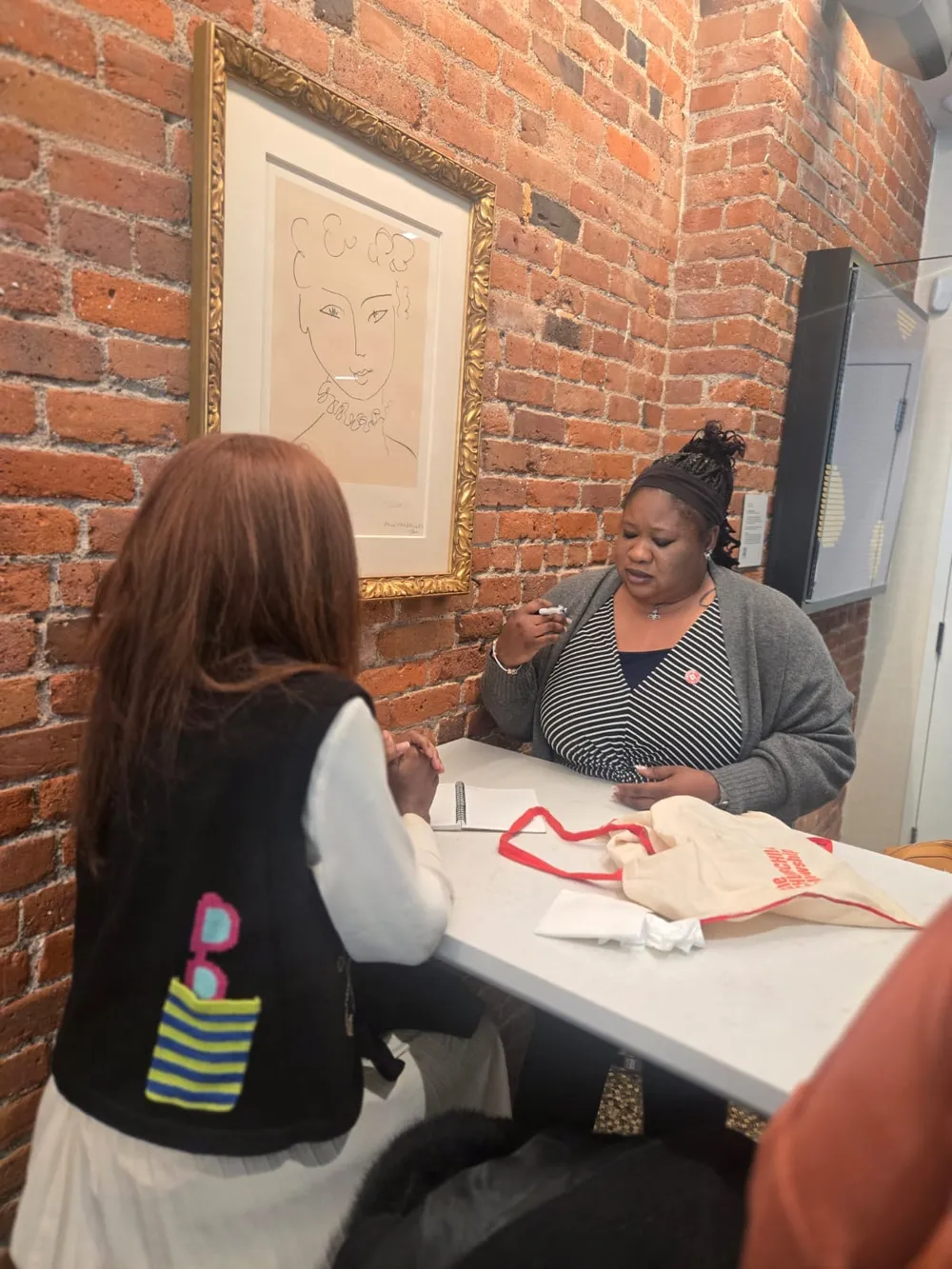
Ehinor at the Alma Domestic Violence Foundation, Atlanta. Download 'Ehinor Otaigbe IMG-002'

Through personal experience and the charity she founded, Ehinor has shown that focusing on the impact abuse has on children can help women experiencing abuse to take steps toward safety.

Experiencing childhood abuse

Growing up in Nigeria as the eldest child, Ehinor had many happy times, yet was also exposed to a toxic, abusive environment. As a child, she was very quiet, withdrawn, and struggling at school, leading her parents to believe she was a slow learner. In reality, she was carrying the silent weight of childhood trauma.

Ehinor proved her parents wrong when she left home for university, studying law with the aim of helping women and eventually qualifying as both a solicitor and a barrister. Yet, seeking escape from her childhood environment, she married and found herself in an abusive relationship. After she moved to the UK in 2005, it was when describing her situation to work colleagues that she realised she was experiencing abuse, even though it wasn’t physical.

"Having read law, and thinking I wanted to help women, I found I couldn't help myself."

That revelation changed everything. Through counselling and divorce, Ehinor began connecting her adult reality to her childhood experiences, sparking the question that would inspire her Churchill Fellowship: “If I held this trauma – which I didn't even know about – how could I ensure the same didn't happen to my children?”

“Being a Churchill Fellow changed how I see my work... I came home with a report, but also with a renewed conviction that this issue deserves far more attention than it receives.’"

From inspiration to Fellowship insights

In 2011, Ehinor founded the charity Wonderfully Made Woman to support African women facing domestic abuse, isolation, and deep cultural shame.

In Greater Manchester, where her work is based, she saw how stigma prevented women from leaving abusive relationships, directly contributing to childhood trauma. By 2016, the charity had opened its doors to all women regardless of ethnicity, and in 2024 Ehinor was awarded an MBE for services to women in Greater Manchester.

Ehinor’s Churchill Fellowship enabled her to explore work in different countries that help African women liberate themselves from abuse and protect their children.

She travelled to Atlanta to visit the Alma Davis Domestic Violence Foundation, to Nigeria to work with CEE-HOPE (Centre for Children's Health Education, Orientation and Protection), and to New York to spend time with Create Her Future Initiative, discovering how organisations support African women and their children to break cycles of abuse.

“The Fellowship gave me something I could never have accessed on my own: the chance to sit with practitioners, researchers, and survivors in different countries and ask, honestly, ‘What is working, and why?’ I saw models where children weren’t an afterthought in a family’s recovery but were given dedicated support alongside their parent.”

Ehinor found her journey to Nigeria particularly eye-opening. Women there were increasingly stepping forward, speaking openly, and finding strong community support, even where statutory support was minimal. This contrasted sharply with Greater Manchester, where stigma still keeps many women silent.

Across all three locations, Ehinor observed models where children were prioritised, with frontline workers trained to recognise childhood trauma responses and to encourage women to consider leaving abusive environments for their children’s sake.


Create Her Future Initiative, New York City. Download 'Ehinor Otaigbe IMG-001'

Translating global learning into UK impact

Ehinor is staging community engagement events with faith and community leaders to shift the conversation around domestic abuse. Her central message to mothers focuses on their families’ long-term wellbeing, asking them to consider how their children are being affected now and in the decades ahead.

The effect is already visible. More women are beginning to seek support and leave without fear or shame. Ehinor’s own children are thriving: her son has graduated with first-class honours and works in London, while her daughter has followed in her footsteps to study law. When other women see her family’s recovery, they are inspired by the knowledge that healing is possible.

Ongoing impact of a Fellowship

Ehinor views her Churchill Fellowship as the bridge between her lived experience and systemic change.

“Being a Churchill Fellow changed how I see my work. It gave language and evidence to instincts I had built from years of grassroots experience, and connected me to a global community asking the same questions. I came home with a report, but also with a renewed conviction that this issue deserves far more attention than it receives.

“My hope is that this Fellowship becomes not just a personal milestone, but a catalyst for conversations, policy, and practical change, so women can walk away from abusive relationships without fear or shame.”

Disclaimer

The views and opinions expressed by any Fellow are those of the Fellow and not of the Churchill Fellowship or its partners, which have no responsibility or liability for any part of them.

Related

Blogs & conversations

Beyond shelter: a different model for tackling homelessness

Ella Hancock reflects on how her Fellowship explored whether shared housing could offer more choice, dignity, and belonging for people at risk of homelessness. Drawing on visits to cohousing communities in the Netherlands, Sweden, and the US, she shares how shared spaces, community-led models, and resident agency can help reduce isolation and create more supportive places to live. As the housing crisis deepens, Ella argues that the strongest ideas from cohousing could help shape more affordable, inclusive housing in the UK.

By Ella Hancock,

Blogs & conversations

Building protection around children with experience of care

Through the first leg of his Fellowship in the USA, Grant Trainer explored what it means to protect and support children with experience of care. Drawing on learning from organisations in Albany, New York City, Brooklyn, and Seattle, he reflects on approaches that place children’s identity, dignity, and relationships at the heart of protection. He is now bringing this learning back to Scotland, where it is shaping his research into policing, care experience, and trauma-informed support, ahead of the next stage of his Fellowship in New Zealand.

By Grant Trainer,

Blogs & conversations

It takes a village: trauma-responsive communities are pivotal to addressing youth violence

Through her Churchill Fellowship, Ruth Oshikanlu explored youth violence as a public health and trauma crisis, rather than simply a criminal justice issue. Travelling to the USA and Australia, she learned from police officers, nurses, teachers, psychologists, community healers, young people, families, and Indigenous Elders about what it takes to build trauma-responsive systems. She is now using this learning to develop a Trauma-Responsive Community Network in her local borough, bringing together those who work with children and young people to create safer, more connected support.

By Ruth Oshikanlu,

Blogs & conversations

Counting women, ending homelessness

Sarah Walters reflects on how her Churchill Fellowship learning from the USA and Canada continues to shape her work to end women’s homelessness in the UK. Her visits showed the power of gender-informed, trauma-aware services designed around women’s experiences, from specialist housing to support that helps women rebuild their lives. She shares how this learning informed a women-only respite hotel as part of Crisis at Christmas 2025, and how it continues to inspire change in services for women experiencing homelessness.

By Sarah Walters,

Newsletter Sign Up