In Conversation with Sophia Alexandra Hall: Empowering care-experienced voices in the media - The Churchill Fellowship

In Conversation with Sophia Alexandra Hall: Empowering care-experienced voices in the media

Churchill Fellows are renowned for doing great things, and this couldn’t be more true of Sophia Alexandra Hall, Deputy Digital Editor of Big Issue, who embodies the spirit of achievement found among Fellows who leverage their travels and learning.

Credit: Stephanie Belton. Download 'Sophia Alexandra Hall blog'

A care-experienced journalist, Sophia developed a crucial toolkit that is now used in national broadcast, digital, and print media newsrooms across the UK. The resource gives guidance for journalists on conducting interviews which positively empower and engage care-experienced people and also offers advice for care-experienced individuals on self-protection and safeguarding their life stories while working with the media.

Two years on from her Fellowship travels, we caught up with Sophia, who is keen to do more to support not just the care-experience community but those from all under-represented groups who find themselves in the media spotlight.

Inspiration for Fellowship travels

It was during the pandemic in 2020, when Sophia, a graduate from the University of Oxford and then 23 (now 28), found herself on rotational furlough from her job in classical music marketing.

Because of Covid, the government temporarily relaxed legal protections for children in care, which incensed Sophia – who was placed in foster care as a teenager – and the care-experience community.

Using her free time to support children’s rights charity Article 39 in its campaign against this change, Sophia found a voice and a passion that inspired her to train as a journalist, which ultimately led to a new job as the content editor at Classic FM.

“When I first became a journalist, I had a lot of people from the care-experienced community reach out to me, and tell me about awful interviews they’d had with other journalists – they were worried about what they had said to them, and what they’d shared about their lives.

“I was getting messages like this at least once a week, and sending back the same advice, so I thought there must be something else I could do.”

What began as a Google doc of advice, shared on request, became the inspiration for Sophia’s Churchill Fellowship and, ultimately, the toolkit.

"My work isn’t just for care-experienced people, but for any under-represented people being interviewed in the media."

Learning from overseas

For her Fellowship, awarded in 2023, Sophia travelled to the United States. She visited Boston, as a centre of academia, New York, home to the prestigious Dart Center for Journalism and Trauma, and LA, which has the largest population of foster children in the USA.

Conducting 50 interviews across 29 days, on a topic which was so personal to Sophia, was challenging.

“I’m used to interviewing people, but this was different. In interviews with other journalists, I was told in detail about traumatic care system stories they'd reported on, ranging from child abuse to sexual assault. They obviously felt comfortable sharing these stories with me as a fellow journalist. Still, as someone with care experience, I don't think they necessarily considered how these accounts might have been affecting me on a personal level. It was a difficult situation to navigate, balancing both my professional and lived experience.”

To Sophia, the need for her toolkit became clearer than ever. Taking seven months to produce, the toolkit has now been widely adopted by multiple media organisations, including the BBC. Its influence is far-reaching, and Sophia knows of care-experienced people who won’t speak to journalists unless they agree to read the toolkit first.

"The Churchill Fellowship has opened up so many doors I never thought possible. It has been a real butterfly effect."

Beyond a Fellowship

But the toolkit was just the start. Sophia, now a trauma-informed journalist, delivers workshops to organisations like the charity SoundDelivery Media, which helps train spokespeople with lived experience. Thanks to post-learning funding from the Churchill Fellowship, she also presented her toolkit at the International Foster Care Organisation conference in Glasgow earlier this year.

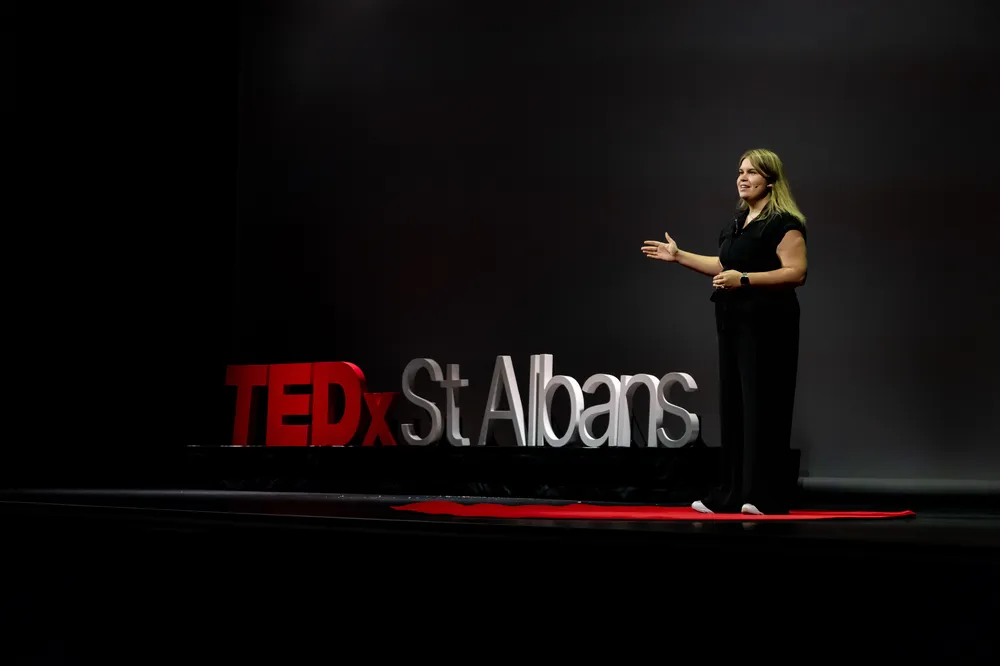
The pinnacle, so far, was giving a TEDx talk, which Sophia aimed at news consumers – in other words, the general public – and how they might think and react differently to stories they read and share.

“My work isn’t just for care-experienced people, but for any under-represented people being interviewed in the media – I call them under-reported on groups. I want to encourage as many people as possible to engage with my work – from journalists, to those with lived experience, and even consumers of news.”

And what part has the Fellowship played in the success of the toolkit and in Sophia’s own journey?

“The Churchill Fellowship has opened up so many doors I never thought possible. So many things wouldn’t have happened; it has been a real butterfly effect. I came back from LA in 2024, and the next day made my debut on Sky News and I’m now a regular morning paper reviewer. My life went from being a content editor at Classic FM to Deputy Digital Editor at Big Issue, which is a role I love and an organisation that does so much good in the world.

“The next big thing might be to write a book, as I feel there’s still much to be said. And I have been told I need to do part two of my TEDx talk, where I make the case for why people should speak to journalists. Because trauma-informed reporting begins by listening to, and being led by those who have actually lived the story.”

Disclaimer

The views and opinions expressed by any Fellow are those of the Fellow and not of the Churchill Fellowship or its partners, which have no responsibility or liability for any part of them.

Related

Blogs & conversations

Beyond the Beat: Building the Architecture for Creative Communities

Dominic Heslop’s Churchill Fellowship explored the “cultural architecture” that allows creativity to thrive and communities to heal, taking him to Jamaica, Berlin, and Athens – each offering lessons in resilience, expression, and collective care. Back in Sheffield, Dominic is embedding these insights into his grassroots organisation Slambarz, combining artistry with structure to support young people, build community, and show how creativity can strengthen wellbeing and identity.

By Dominic Heslop,

Blogs & conversations

Health, Homelessness, and Hope: Children in Temporary Accommodation

Monica Lakhanpaul’s Fellowship took her to Australia to explore how different systems respond to the health and wellbeing needs of children living in temporary accommodation. Back in the UK, her work has already helped launch the In Their Own Words report in the Scottish Parliament and continues through research, media, and international collaborations. She now hopes to build on this momentum to ensure that children’s voices are heard – and acted upon – in shaping a fairer future.

By Monica Lakhanpaul,

Blogs & conversations

In Conversation with Elizabeth Carrington: Championing new physiotherapy techniques for children

We spoke to Churchill Fellow Elizabeth Carrington about her 1973 Fellowship, which took her to Hungary, Switzerland, and Italy to explore new physiotherapy techniques for children with cerebral palsy and neurological disorders. She reflected on how the experience shaped her lifelong international career – from India to Yemen to the World Health Organization – and why she still feels so connected to the Fellowship more than 50 years on.

By Elizabeth Carrington,

Newsletter Sign Up