Protecting the power to question - The Churchill Fellowship

Protecting the power to question

15 September marks the International Day of Democracy. One of its core ideas is the value of ‘people power’ – the voice, choice, and participation of citizens.

In systems that don’t value accountability or a plurality of opinion, civic voice is often one of the first things to come under pressure. Counterpower is silenced, and democratic decline can begin through small, gradual steps that restrict people’s ability to question, organise, and participate.

In 2023, UK civil society space was downgraded to ‘obstructed’. This drew me to investigate ways to protect civic resilience while it’s possible. My Churchill Fellowship led me to learn from places where civic space has reduced, but where activists have found ways to sustain their work and keep building counterpower under pressure.

My Fellowship focused on Central Asia, a region where civil space is shrinking, authoritarianism is increasing, and there is limited support from society at large. Yet activists are still pushing back and finding ways to keep their work alive.

A fundamental question emerged through my research – how is counterpower created?

Critical thinking is an essential part of a functioning civil society. Without a pipeline of new activists, civil society will eventually wither away. But to become an activist, one has to arrive at a point of seeing things differently and wanting to change something. How can this be developed in a context where critical thoughts and debate are not welcome? How can the boundaries of people’s thinking be broadened?

"I will be speaking about my report’s findings at a webinar on 15 September, the International Day of Democracy."

My key finding was that civic participation does not begin only with formal campaigning or activism. It can also grow through everyday opportunities to think critically, encounter different perspectives, express ideas, and practise what I came to think of as “oppositional muscle”: the ability to question, imagine alternatives, and take part in shaping change.

What was particularly striking was the level of negative public opinion towards activism, civil society, and advocacy for change. In shrinking civil society spaces, negative narratives about activists are often used to suppress dissenting voices. Activists are presented as destructive ‘interrupters’, and these narratives seep into the field itself, with many changemakers holding a negative self-image that can contribute to burnout.

To sustain civil society, we need alternative, positive narratives about civic space and the people who work to protect it.

This conclusion led me to an art activism narrative change project with the Centre for Applied Human Rights in 2025, called A0 of Freedom. I co-led a cohort of art activists from Central Asia to create posters communicating the positive value of civic space and democratic engagement. The project showed how simple, engaging language and visual storytelling can help communities imagine a more open, generous, and inclusive future.

On the International Day of Democracy, I think we should recognise the value of systems that have the courage to support people to criticise them, identify gaps, and imagine something better.

That means investing in civic resilience while we can: empowering citizens with critical thinking, building wider public understanding of the value of civic space, and making sure civic participation works for those who are marginalised and not listened to.

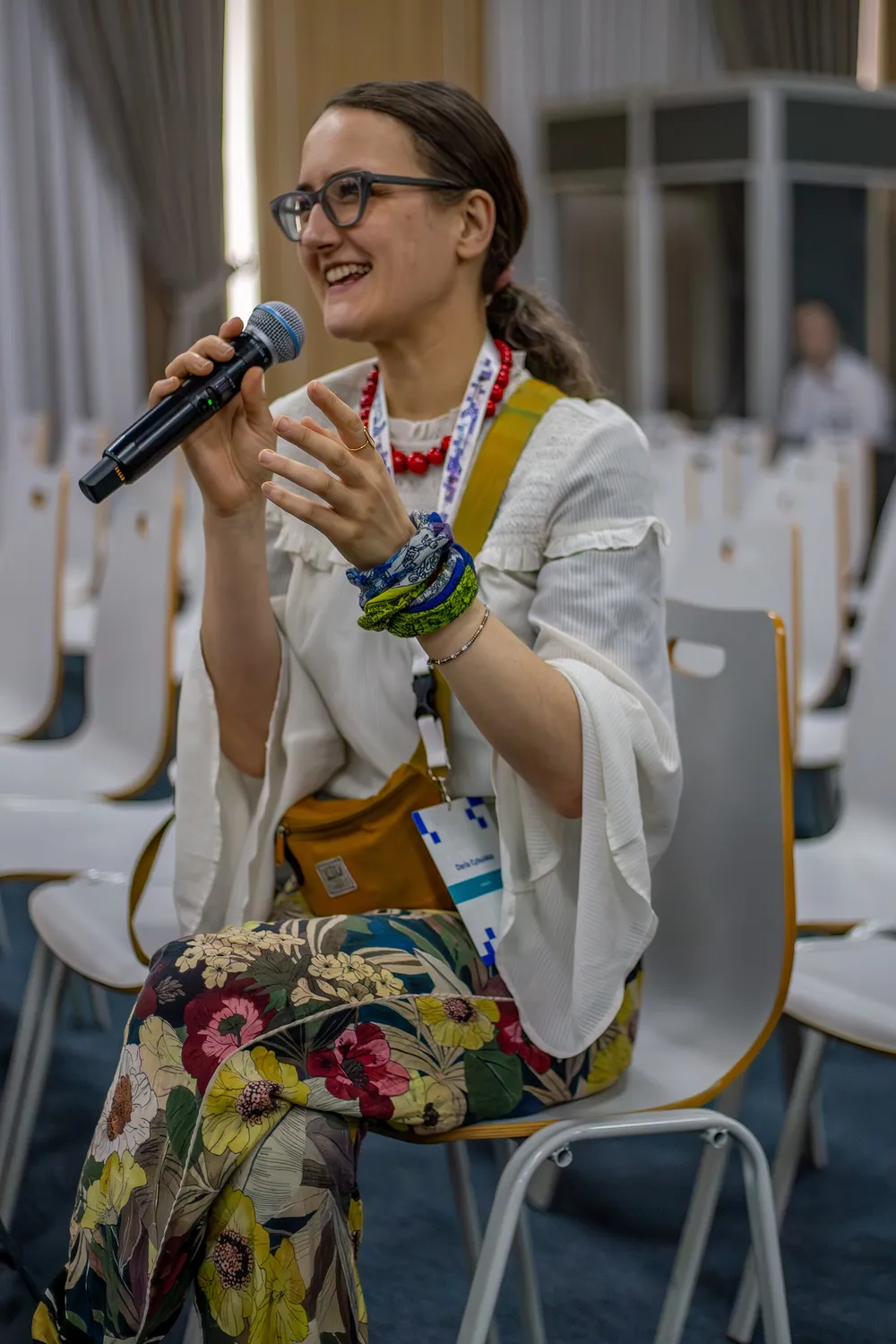
"I think we should recognise the value of systems that have the courage to support people to criticise them, identify gaps, and imagine something better."

My report invites people supporting civic space in the UK, as well as activists themselves, to reflect on what is needed to sustain activist muscle within society. This includes holding a broad view of what counts as civil society, supporting critical thinking programmes, maintaining an inclusive definition of civil society actors, and using positive narratives about the value of civic engagement.

At the heart of my Fellowship was the idea of oppositional thinking. This is not about destruction. It is about protecting the ability to question, participate, and imagine better futures – and recognising that democracy depends on that ability being sustained.

I will be speaking about my report’s findings at a webinar on 15 September, the International Day of Democracy. If you would like to attend, please register on Zoom.

Disclaimer

The views and opinions expressed by any Fellow are those of the Fellow and not of the Churchill Fellowship or its partners, which have no responsibility or liability for any part of them.

Related

Blogs & conversations

In conversation with Darren Way: From gang intervention to pioneering research unit

We spoke to Darren Way about how a Churchill Fellowship helped shape a new model of long-term youth intervention – from opening a charity with £10, two chairs, and an empty shopfront, to building Streets of Growth into a nationally recognised organisation supporting thousands of young people. Darren reflects on learning from pioneering community projects in the USA, putting that learning into practice in East London, and why he is now launching a research and policy centre to influence how youth harm prevention is understood, funded, and delivered in the UK.

By Darren Way,

Blogs & conversations

Later living that makes the most of every moment

Amid growing pressures across housing, health, and care, Churchill Fellows Graham Russell and Oona Goldsworthy argue that the lessons from their Fellowships – integrated commissioning, mixed communities, and stronger collaboration – are needed more urgently than ever. They highlight how Brunelcare, the care charity they both work at, is beginning to apply these approaches, from reablement and redevelopment to community-focused work that aims to improve later living.

By Graham Russell ~ Oona Goldsworthy,

Blogs & conversations

Renegade Guides: the places we go, the stories we share

Writer, guide, and founder of Living London, Saira Niazi spent her Churchill Fellowship in the USA exploring how tours and storytelling can be more inclusive, ethical, and community-focused. Her travels took her through 41 neighbourhoods, 32 guided tours, and 36 interviews with “renegade guides,” organisers, and storytellers, culminating in the creation of the Renegade Guides Handbook. Since its launch, Saira has been sharing her findings widely and continues to lead tours, write, and collaborate with communities.

By Saira Niazi,

Blogs & conversations

How rural Canada is rethinking migration

Keith Ruffles travelled across Canada to explore how rural communities are using migration to reverse population decline. Over five weeks, he visited six towns taking part in the Rural and Northern Immigration Pilot (RNIP), meeting with local coordinators, federal agencies, and migrants like Natalia and Mohammad, who shared their experiences of settling in Canada. In this blog, Keith reflects on what the UK could learn from Canada’s community-driven approach to migration, and how the Fellowship gave him the time, space, and connection to explore these issues in depth.

By Keith Ruffles,

Newsletter Sign Up